Suspended ceilings are widely used in Sydney homes, units, and commercial spaces. They’re often installed during renovations, fitouts, or when upgrading older ceilings that are damaged, uneven, or outdated. The two main options are suspended Gyprock ceilings and suspended grid ceilings. Each is used in different situations, depending on the finish you want and how the space will be used.
In this post, we’ll explain the key differences between the two, including where each is typically used, how they compare in different factors, and what to consider when choosing the right option for your property.
What is a Suspended Gyprock Ceiling?
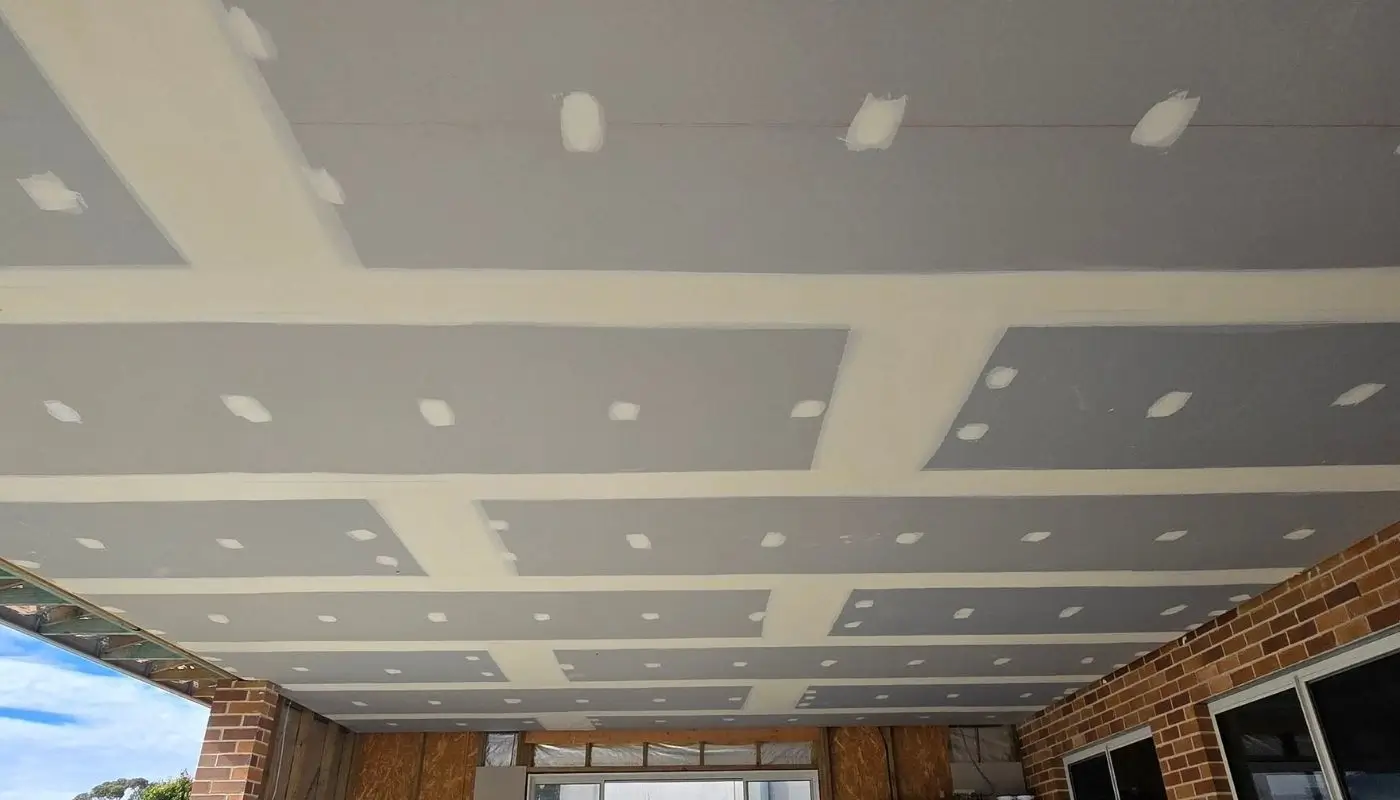
A suspended Gyprock ceiling is a plasterboard ceiling installed on a frame below the original ceiling. The joins are filled and sanded so the surface becomes smooth and ready for painting. It’s commonly used in homes, apartments, and commercial areas like shopfronts and reception areas where a clean, modern finish is preferred. Once painted, it blends in with the rest of the interior and looks like a normal plasterboard surface, which is one of the advantages of suspended ceilings and why they are often used in homes and modern fitouts.
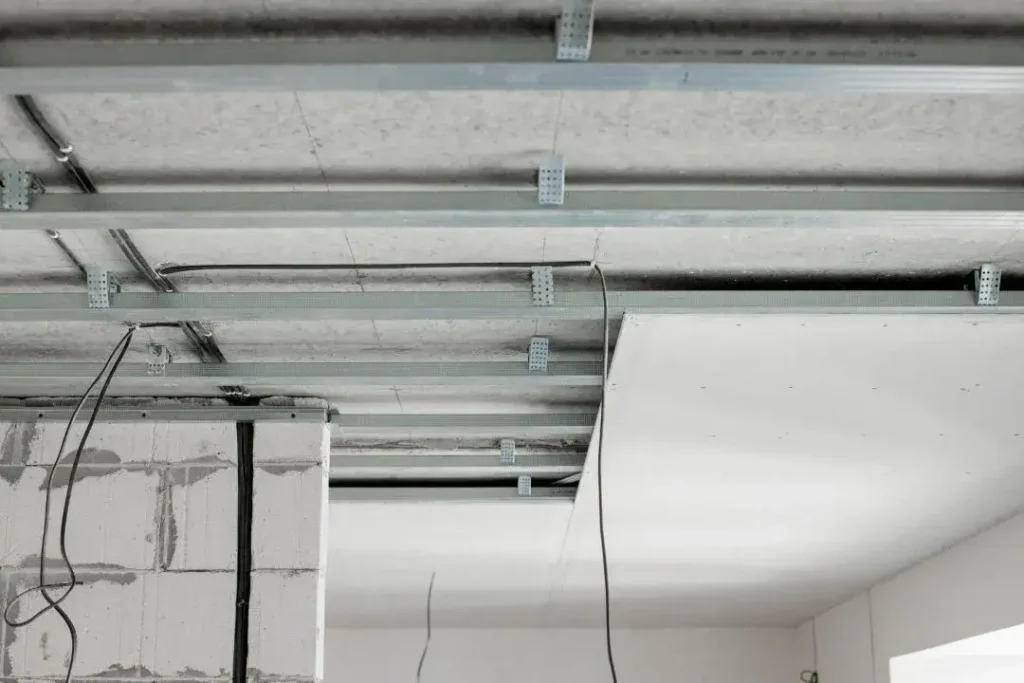
It’s also commonly installed in older homes with cracked or sagging plaster ceilings, and in units with dated textured or popcorn ceilings that need a clean update. Rather than patching multiple areas, installing a suspended Gyprock ceiling can create an even, consistent surface across the entire room. In houses, apartments, and strata units, habitable rooms are generally required to have ceiling heights of at least 2.4 metres, so lowering the ceiling needs to be carefully considered and may not be suitable for all situations.
What is a Suspended Grid Ceiling?
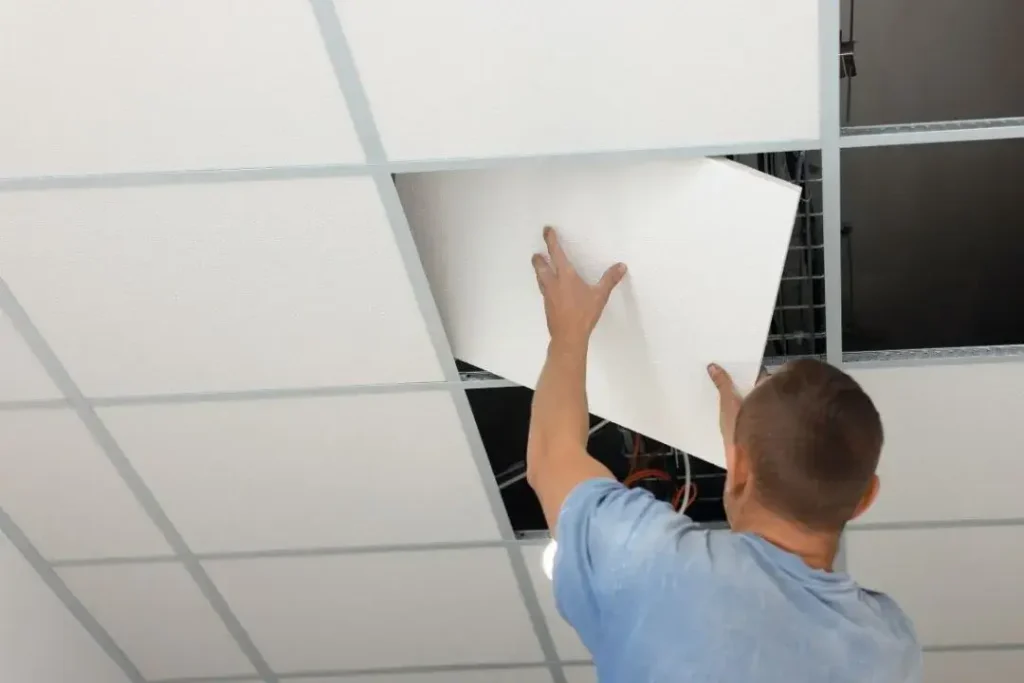
A suspended grid ceiling uses a visible metal framework with lightweight tiles fitted to it. These tiles can be lifted out easily, allowing access to services such as air conditioning, electrical wiring, and data cabling. This system is widely used in offices, retail tenancies, clinics, and commercial fitouts where ongoing access is needed. It’s typically chosen in spaces where easy maintenance and flexibility are more important than achieving a seamless plasterboard finish.
Key Differences: Suspended Gyprock vs Suspended Grid Ceilings
Cost Considerations
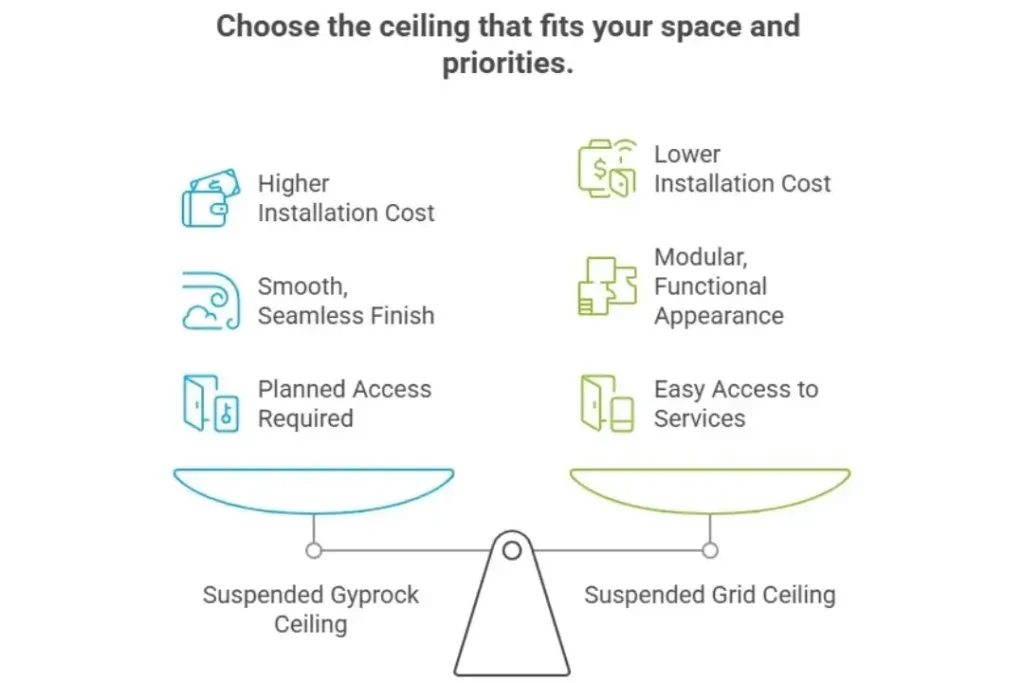
A suspended Gyprock ceiling usually costs more to install because the plasterboard needs to be fixed, set, and sanded to achieve a smooth finish. This takes more time and labour compared to a suspended grid ceiling, which uses a metal grid and pre-made tiles that can be installed more quickly. The simpler installation process makes grid systems more cost-effective, especially in larger commercial areas.
Appearance and Finish
With suspended Gyprock, the result is smooth and continuous and once painted, it blends in with the rest of the interior like a normal plasterboard surface. On the other hand, grid systems have visible frameworks and individual tiles, which create a more modular and functional appearance.
Access to Services and Easy Repairs
Access to services and repairs is generally simpler with a suspended grid ceiling because individual tiles can be lifted out for quick inspection or changes to electrical, HVAC, fire, or data services, and if a tile gets damaged or stained, it can usually be replaced on its own with minimal disruption.
With a suspended Gyprock ceiling, access typically needs to be planned with access panels, trades may need to cut into the plasterboard and then patch, sand, and repaint afterwards. Gyprock repairs can still be finished neatly, but they’re usually more labour-intensive because you’re restoring a continuous painted surface rather than swapping out a single tile.
Which Ceiling is Right For Your Space?
A suspended Gyprock ceiling is usually the better choice if:
- Appearance is important and you want a smooth, seamless finish
- The space is a home, apartment, or front-facing commercial area
- You don’t need regular access above the ceiling
A suspended grid ceiling system is the better choice if:
- Easy access to the services above the ceiling is important
- The space is an office, retail tenancy, or commercial fitout
- Installation costs, installation speed and simpler long-term maintenance are priorities
Conclusion: The Right Choice Depends on Your Space and Priorities
Suspended Gyprock ceilings and suspended grid ceilings both solve different problems, and neither is automatically the better option. The right choice depends on your budget, the level of finish you want, and how much access above the ceiling will be needed over time. In some spaces, appearance will drive the decision. In others, practicality and maintenance will matter more.
If you’re planning a ceiling upgrade, a quick site assessment can help clarify what makes the most sense for your space. Our team can guide you through the options and recommend a system that suits both your property and your priorities.
Call us today on (02) 8000 1202 to arrange a site visit and discuss the most suitable option for your ceiling with the residential and commercial plastering contractors Sydney trust for a professional service and impeccable workmanship.