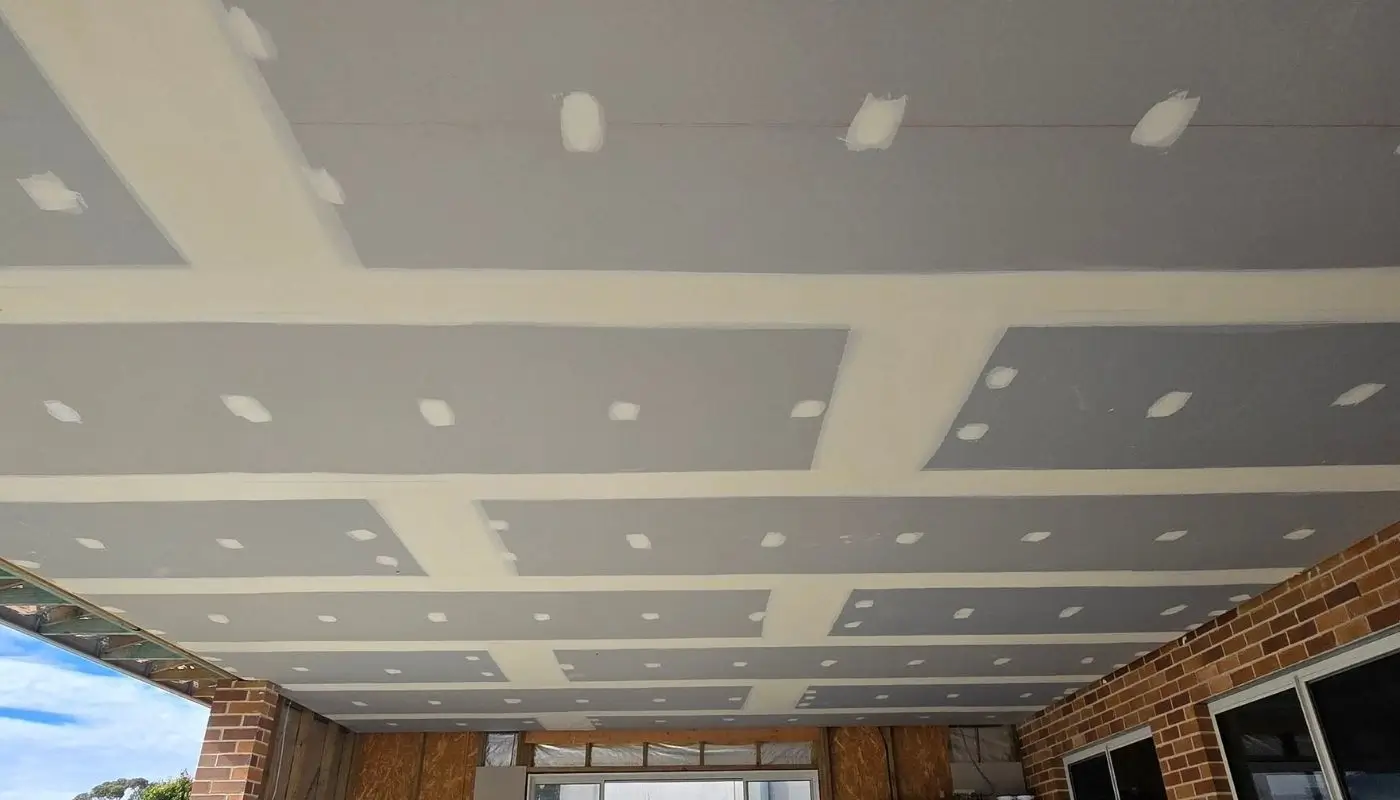
The “Exposed vs. Closed” ceiling debate is one of the most pivotal decisions in any commercial fitout. An open ceiling offers an industrial look, and a closed system provides a polished look. However, the choice is never purely cosmetic. In this post, we’ll break down the differences between these options and the various factors that need to be taken into account when deciding between an exposed vs closed ceiling for your commercial fitout.
What is an Open Ceiling?
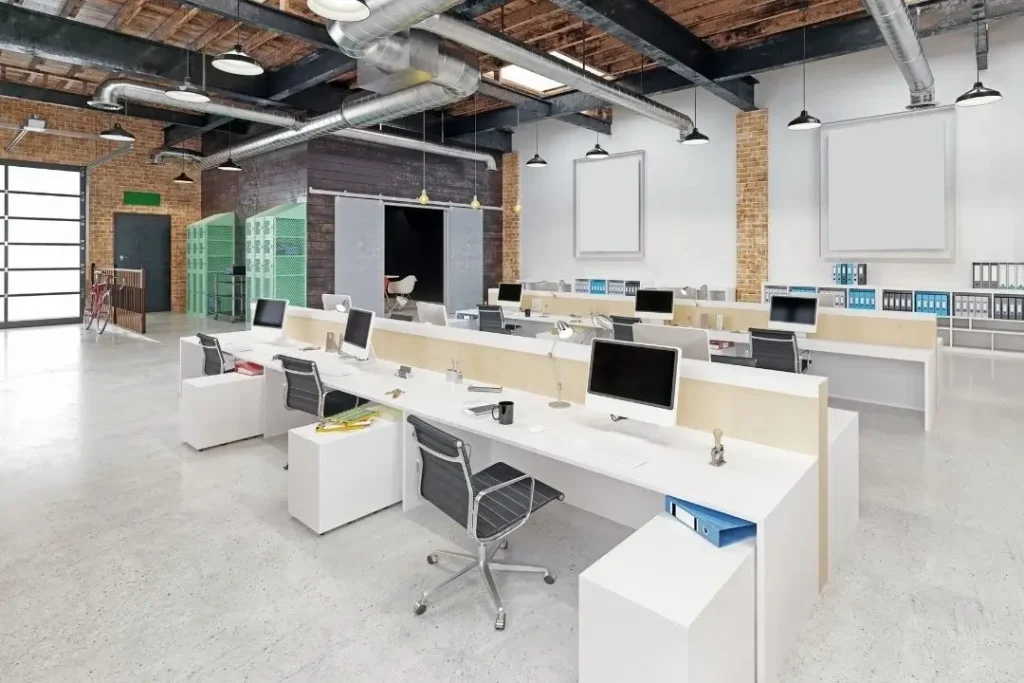
An open ceiling, also called an exposed ceiling, means there’s no finished ceiling installed to cover the structure above. The concrete slab or corrugated roof, beams, ductwork, sprinklers, cable trays, and other services remain visible instead of being hidden. Everything you would normally see above a ceiling is left exposed as part of the final fitout.
To make it look clean and intentional, the exposed structure and services are usually cleaned, organised, and painted in a consistent colour. Lighting is chosen to suit the open layout, using suspended or surface-mounted fittings instead of recessed lights. Because nothing is hidden, neat installation and careful coordination between trades are important to achieve a professional finish.
What is a Closed Ceiling?
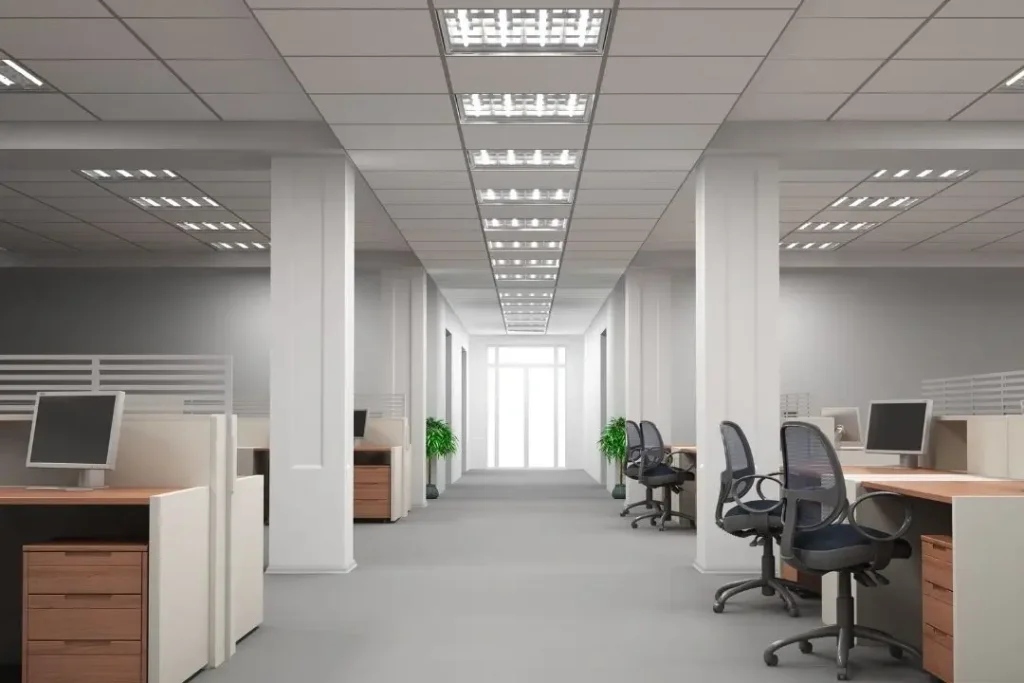
A closed ceiling is a finished ceiling installed below the roof structure to hide the roof, ductwork, wiring, pipework, and other services. Instead of leaving everything exposed, a ceiling system is added to create a clean, consistent surface across the space. This gives the fitout a more complete and visually controlled appearance.
There are two common types used in commercial fitouts:
- Plasterboard (Gyprock) ceilings – Fixed in place and finished to create a smooth, seamless surface ready for painting. These are often used where a clean, premium finish is preferred.
- Suspended grid ceilings – A metal framework with removable tiles that conceal services while still allowing access above when maintenance or changes are needed.
Both systems hide services overhead, but they differ in how they’re accessed and how they perform in different environments. For a more detailed explanation, see our article covering the differences between suspended plasterboard and suspended grid ceilings.
How Open and Closed Ceilings Differ
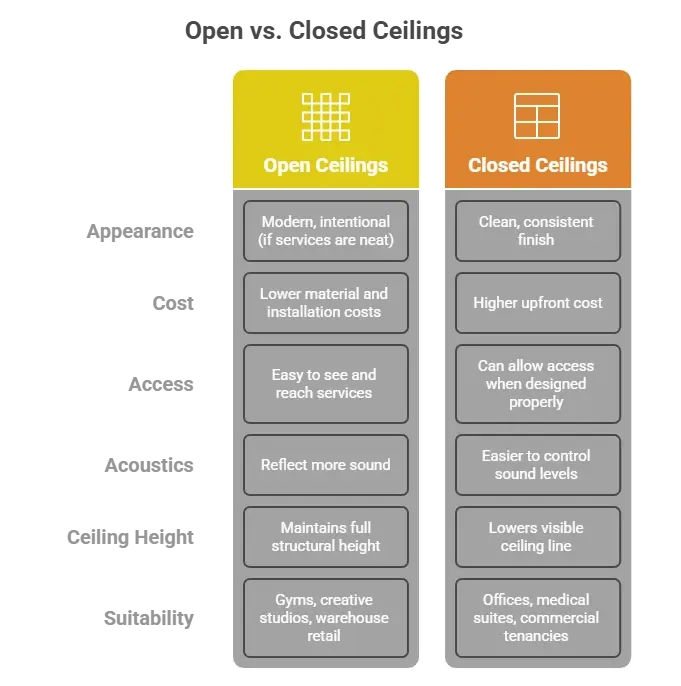
Appearance and Overall Design Outcome
Open ceilings can look modern and intentional when services are installed neatly and painted consistently. However, because everything remains visible, the final appearance depends heavily on how well the services are coordinated. Any inconsistencies or changes made later will be noticeable.
Closed ceilings make it easier to achieve a clean and consistent finish. By covering services above, they create a uniform surface that helps the space feel more complete. This also makes it easier to position lighting and other ceiling elements without having to work around exposed services.
Cost and Installation Considerations
Leaving the ceiling exposed removes the need for framing, plasterboard, or ceiling tiles, which reduces material and installation costs. However, exposed services still need to be cleaned, coordinated, and painted to achieve a presentable finish. This can add preparation time, particularly in tenancies with high density of ductwork, pipework, or electrical runs.
Installing a closed ceiling involves additional materials and labour, including framing or grid systems, lining or tile installation, and finishing. While this generally increases the upfront cost, it also creates a cleaner and more controlled result, especially in spaces where presentation, acoustic performance, or service concealment are important.
Access to Services and Future Maintenance
Access to services is often a key factor in commercial spaces, particularly where layouts may change or regular maintenance is required.
Exposed ceilings make it easy to see and reach services without needing to remove or modify any ceiling materials. This simplifies inspections and minor changes. However, any new services or alterations will remain visible, affecting the overall appearance if not coordinated carefully.
Closed ceilings conceal services but can still allow access when designed properly. Suspended grid ceilings are especially useful in this regard, as individual tiles can be lifted to reach the services above. Plasterboard ceilings typically require access panels or patching if changes are needed, but they allow services to be hidden once the work is complete.
Acoustics and Noise Control
Open ceilings tend to reflect more sound, especially in spaces with hard surfaces like concrete floors and glass. This can make the environment feel louder, with more echo and background noise. This is an important consideration in workplaces, where excessive noise can affect comfort and communication. In some fitouts, additional treatments such as wall panels or ceiling baffles are used to help manage this.
Closed ceilings make it easier to control sound levels. Ceiling tiles and insulation above can help absorb sound and reduce echo, creating a quieter and more comfortable environment. This is often preferred in offices, consulting rooms, and other spaces where clear communication is important.
Ceiling Height and Spatial Feel
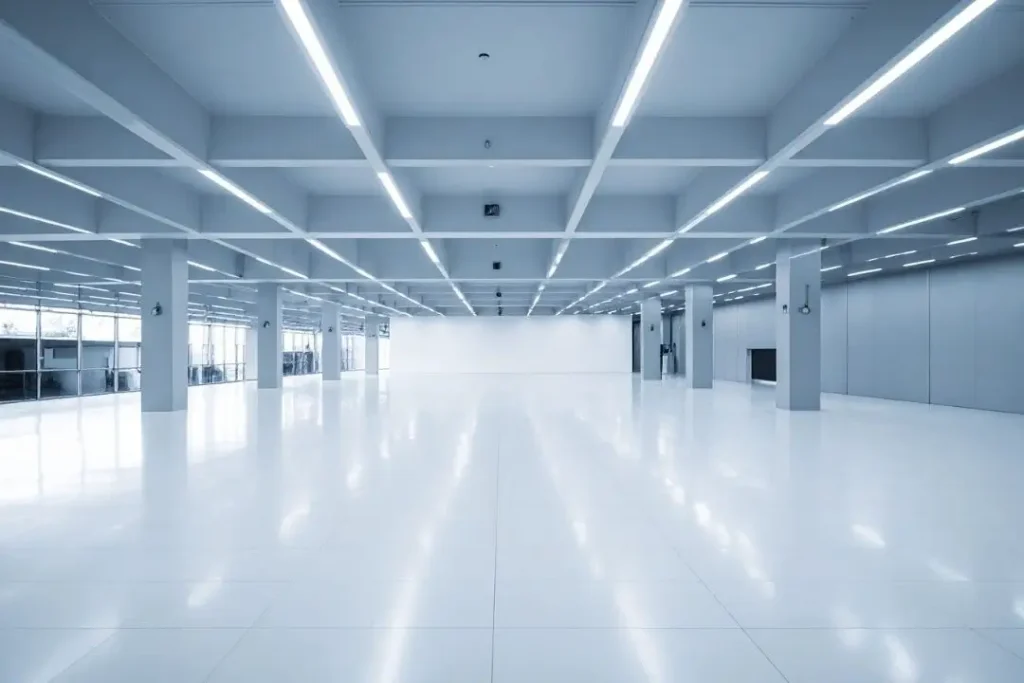
Leaving the ceiling exposed maintains the full structural height, which can make a space feel larger and more open. This is particularly effective in creating a more spacious atmosphere, where the extra height makes the room feel lighter and less confined.
Installing a closed ceiling lowers the visible ceiling line, but it also creates a consistent horizontal plane. This can improve visual order and conceal uneven structural elements, resulting in a more controlled and refined presentation.
In buildings with limited ceiling height, this decision needs to be assessed carefully.
Suitability for Different Commercial Spaces
Exposed ceilings are often used in gyms, creative studios, and warehouse-style retail spaces, while plasterboard and grid ceilings are more common in offices, medical suites, and commercial tenancies.
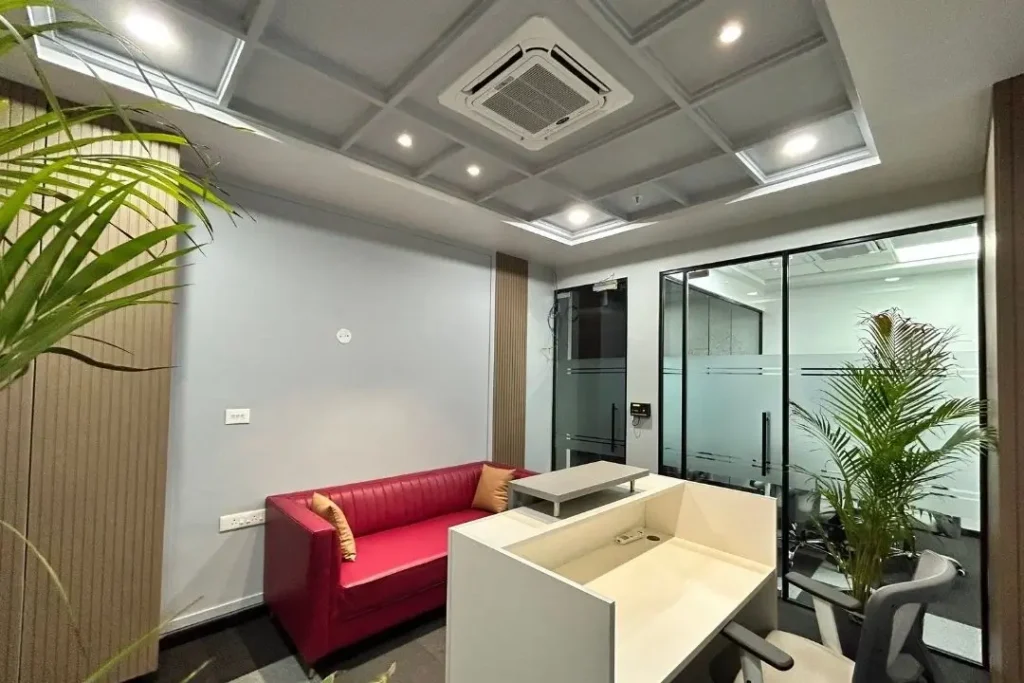
Many commercial fitouts use a combination of both. For example, a single commercial fitout might use an open ceiling in the main retail or open-plan area, while plasterboard or grid ceilings are installed in offices and staff areas within the same tenancy.
How to Decide Without Overthinking It
Choosing the right ceiling system usually comes down to how the commercial space will be used and what outcome you’re aiming for.
Open ceilings are often suitable when:
- The exposed look suits the tenancy, such as gyms, creative studios, or industrial-style retail
- The structure and services above are neat enough to be left visible
- Maintaining full ceiling height is beneficial to the overall feel of the space
- Easy visual access to overhead services is preferred
Closed ceilings are often more suitable when:
- A clean, consistent finish is important, especially in offices, medical suites, and customer-facing areas
- Acoustic control is needed to reduce echo and improve comfort
- Services need to be concealed to achieve a more refined presentation
- Lighting layouts and ceiling features require a more controlled surface
Making the Right Choice for Your Commercial Fitout
Open ceilings and closed ceilings both serve different purposes, and each can be appropriate depending on the space. Many commercial fitouts use a combination of both, selecting the approach that best suits each area within the tenancy.
If your project involves plastering for commercial fitouts, working with an experienced team in Sydney ensures a clean and reliable finish. Call us on (02) 8000 1202 to get professional advice about your space and a free quote!