How to Tell If Your Cornices Need Attention
Cornices sit at the junction between your walls and ceiling, which makes them one of the first places to show stress when a building moves, settles or takes on moisture. Most homeowners notice something looks off but aren’t sure whether it’s cosmetic or a sign of something more serious.
The good news is that most cornice problems are straightforward to diagnose. Knowing what to look for saves you time and helps you have a more useful conversation with your plasterer.
Gaps Between the Cornice and the Ceiling or Wall
A visible gap where the cornice meets the ceiling or wall is one of the most common signs of trouble. These gaps usually appear because the cornice has pulled away from the substrate, either through building movement, poor original installation, or the adhesive failing over time.
Small hairline gaps are often a cosmetic fix. Wider gaps, particularly ones that have grown over months, suggest the cornice is no longer properly bonded and needs to be re-secured before it becomes a safety issue.
Sagging Cornices
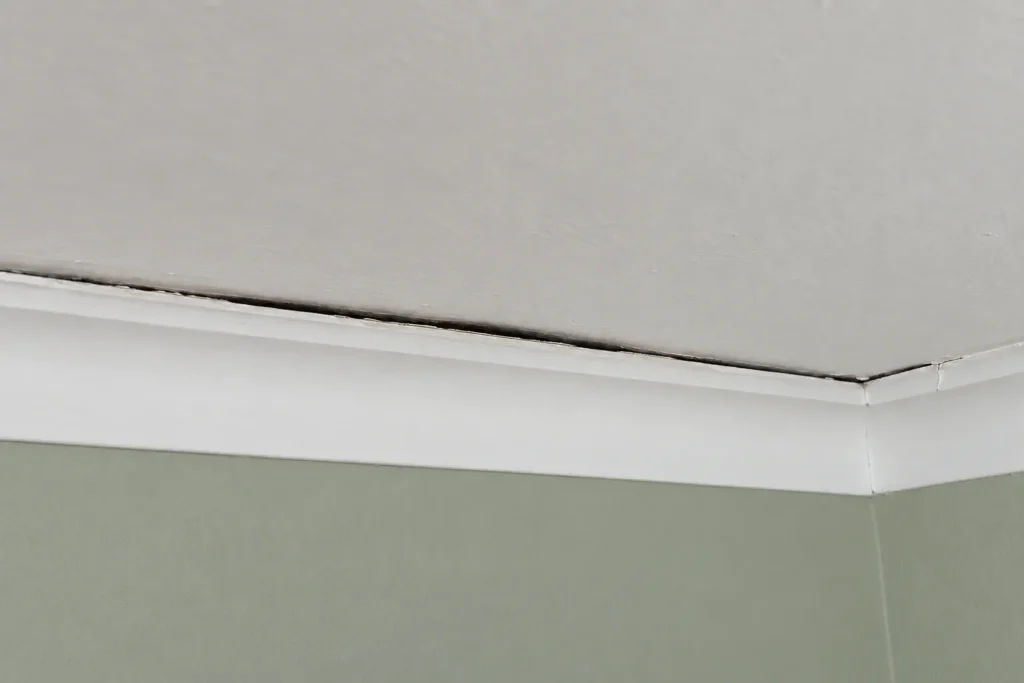
Sagging is a more urgent warning sign. If a section of cornice is visibly bowing downward or pulling away from the ceiling line, the fixing has failed and the cornice is relying on little more than paint and friction to stay in place.
Sagging cornices can fall, which creates a risk for anyone in the room below. This is not a problem to monitor and revisit later. A plasterer should assess it promptly to determine whether the section needs re-bonding or full replacement.
Cracked Cornice Joints
Cornice joints are the points where two lengths of cornice meet, typically at internal corners. These joints crack when the building shifts slightly, when the original joint wasn’t finished correctly, or when moisture has caused the material to expand and contract over time.
A cracked joint is usually a cornice repair job rather than a full replacement. The old filler is cut back, the joint is re-taped or re-set, and the surface is refinished. Left alone, cracked joints tend to widen and become harder to repair cleanly.
Cracks Running Along the Face of the Cornice
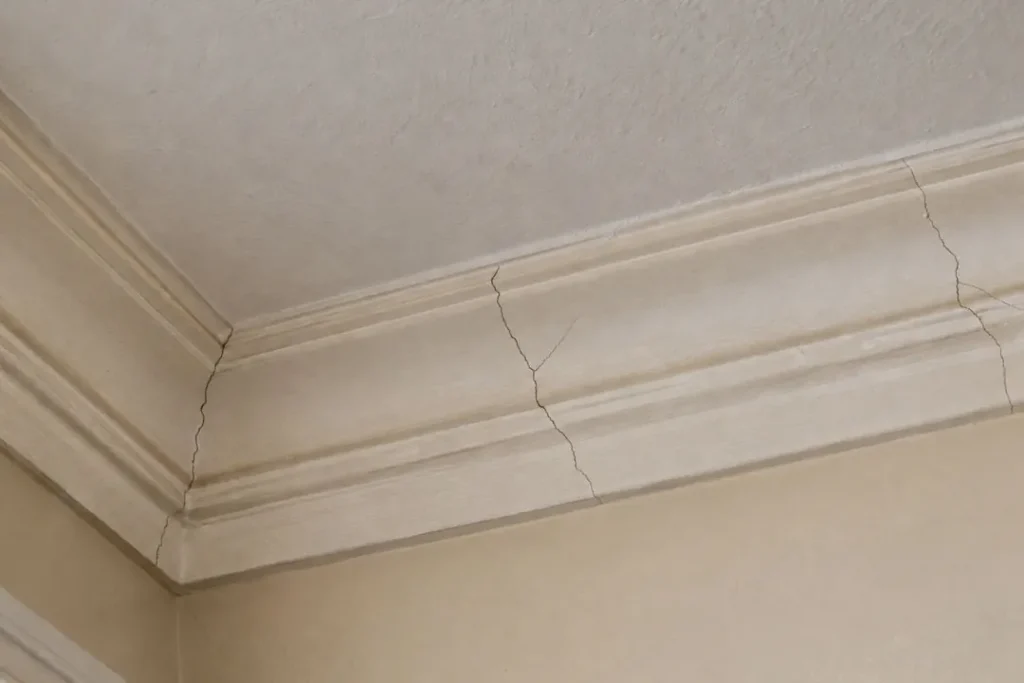
Hairline cracks across the face of a cornice are common in older homes, particularly those with plaster cornices rather than modern gyprock cornice profiles. They often develop as the building settles over decades.
Fine surface cracks are generally a cosmetic issue and can be filled and repainted. Wider cracks, or cracks that follow a consistent pattern across multiple sections, may point to ongoing movement in the structure and are worth having a plasterer look at before repainting.
Staining, Bubbling or Soft Spots
Discolouration, bubbling paint or soft patches on or around a cornice usually indicate moisture. Water from a roof leak, plumbing issue or condensation can saturate the cornice material, causing it to weaken and eventually fail.
Moisture damage rarely stays contained to the cornice alone. If you notice staining near the cornice line, it’s worth checking whether the ceiling above shows similar signs. A broader look at what ceiling cracks and staining can indicate helps put the full picture together before any repair work starts.
Loose or Hollow-Sounding Sections
Gently pressing along a cornice run can reveal sections that feel loose or flex slightly under pressure. Tapping along the surface and listening for a hollow sound is another way to check whether the cornice has lost contact with the wall or ceiling behind it.
A hollow sound doesn’t always mean the cornice is about to fall, but it does mean the bond has failed in that area. Those sections need to be re-fixed before the problem spreads or the cornice drops.
Visible Separation at the Wall Face
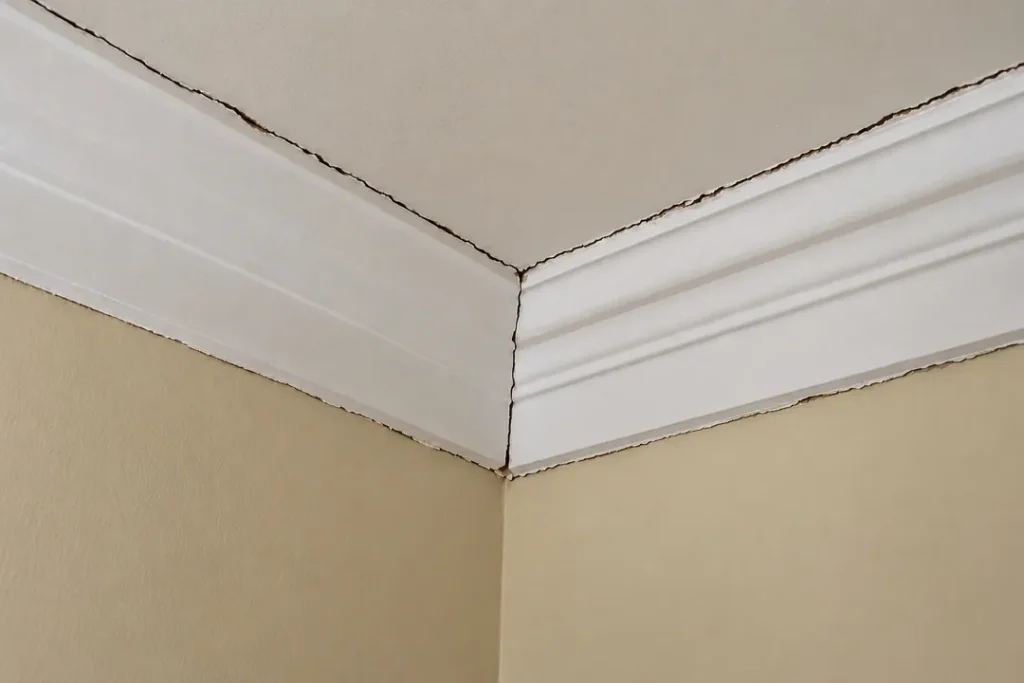
Sometimes the cornice stays attached to the ceiling but pulls away from the wall below it, leaving a visible shadow line or gap along the bottom edge. This is common in brick veneer homes where the internal wall framing moves independently of the masonry.
The repair approach depends on how much movement is occurring. In some cases, flexible filler and a control joint are the right solution. In others, the cornice section needs to be removed and re-installed with the correct fixing method for that wall type.
When Repair Is Enough and When Replacement Makes More Sense
Most cornice damage, including cracked joints, small gaps and loose sections, can be repaired without replacing the entire run. Repair is usually the right call when the cornice profile is still intact, the damage is localised, and the underlying cause has been addressed.
Replacement makes more sense when you notice signs such as the cornice is extensively cracked, heavily water-damaged, or so old that matching the profile for a patch repair isn’t practical. Some homeowners also take the opportunity to upgrade the profile entirely, particularly during a renovation.
If the damage extends beyond the cornice to the ceiling or wall surface, those areas will need attention at the same time. Ceiling repairs and wall patching and resurfacing are often part of the same scope of work, particularly after water damage or significant building movement.
What to Do Before Calling a Plasterer
Take a walk through your home and check the cornice line in each room, paying attention to corners, areas near windows, and any rooms directly below a bathroom or roof space. Note where you see gaps, cracks, staining or sections that look out of alignment.
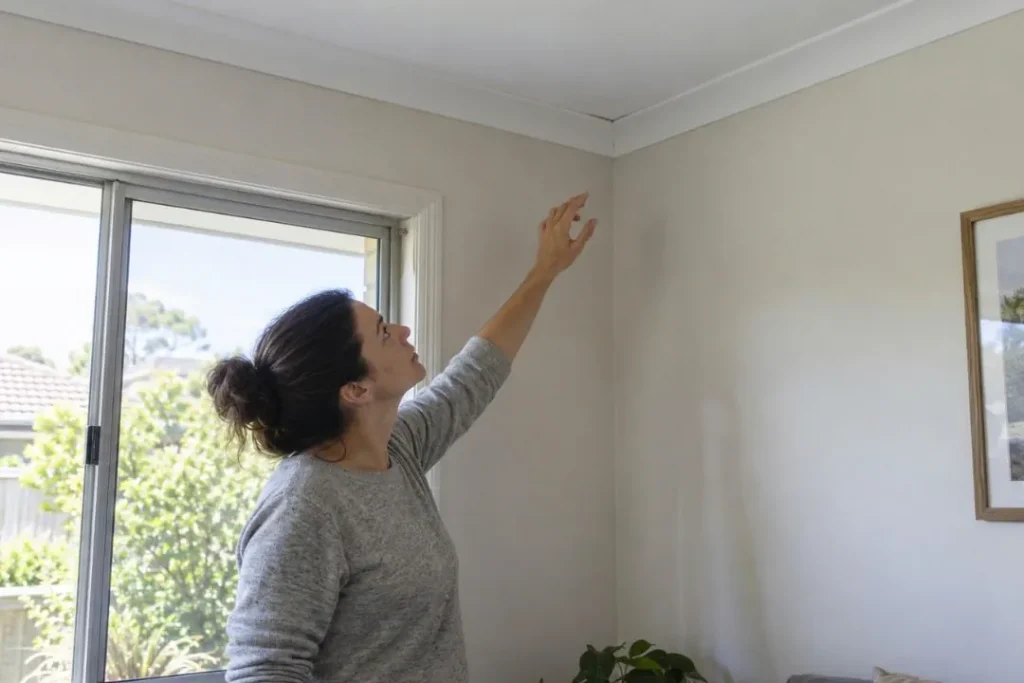
Photos taken in good light make it easier for a plasterer to give you an accurate assessment before arriving on site. The more specific you can be about what you’ve seen and where, the faster the job can be scoped and quoted.
Get Your Cornices Assessed and Repaired
Catching cornice problems early keeps repair costs down and avoids the risk of a section coming loose. For cornice repairs Sydney homeowners can trust to handle ceiling repairs and cornice work across Greater Western Sydney, South West Sydney and the Inner West, get in touch.
Call (02) 8000 1202 or get in touch online to arrange your free quote.