Why Older Cornices Need a Different Approach
Federation and California Bungalow homes across South West and Inner West Sydney were built with decorative plaster cornices that are nothing like the plain cove you find in modern construction. These profiles are deeper, more detailed, and often irreplaceable through standard building suppliers.
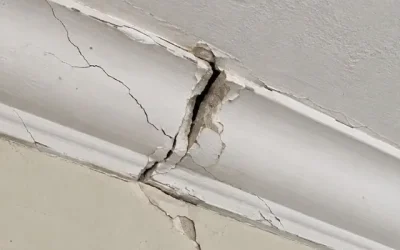
When a section cracks, sags, or falls away, the challenge is not just fixing the damage. It is matching what was already there so the repair disappears into the original work.
Understanding the Original Profiles
Ornamental cornices from the Federation era typically feature egg-and-dart mouldings, acanthus leaf details, dentil blocks, or stepped cove profiles. California Bungalow homes from the 1920s and 1930s tend toward simpler but still distinctive profiles, often with a broad cove and a flat fillet or beaded edge.
These profiles were cast in lime-based plaster, which behaves differently to modern gypsum. Lime is more flexible over time, which is partly why so much of it has survived a century of Sydney summers and humidity.
Profile Matching Before Any Work Starts
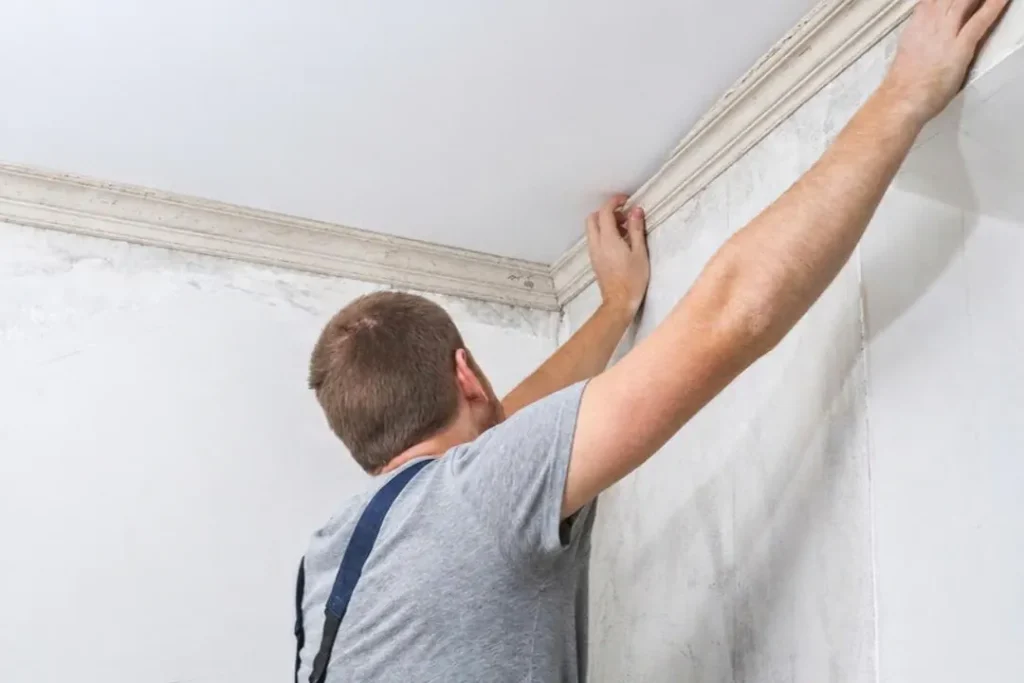
The first step in any heritage cornice restoration is profiling the existing cornice accurately. A plasterer experienced in this work will take a physical template from an undamaged section, usually using a profile gauge or a flexible curve tool, to capture the exact shape.
That template drives every decision that follows. If the profile is not matched precisely, the repair will read as a patch rather than a restoration, which defeats the purpose entirely on a heritage property.
When the Original Profile Is Partially Destroyed
Sometimes the damage is extensive enough that no clean section remains to template from. In that case, the plasterer works from the reverse side of fallen pieces, from period architectural drawings if available, or from comparable homes of the same era and style.
Decorative plaster conservation principles recognise that matching the original material and method is just as important as matching the shape. Using the wrong base mix can cause differential movement between old and new plaster, leading to further cracking down the track.
Run-in-Place vs Cast Replacement Sections
There are two main methods for restoring decorative cornices in older homes. The first is running the profile in place using a purpose-cut zinc or timber horse, which is the traditional method and produces a seamless result when done well.
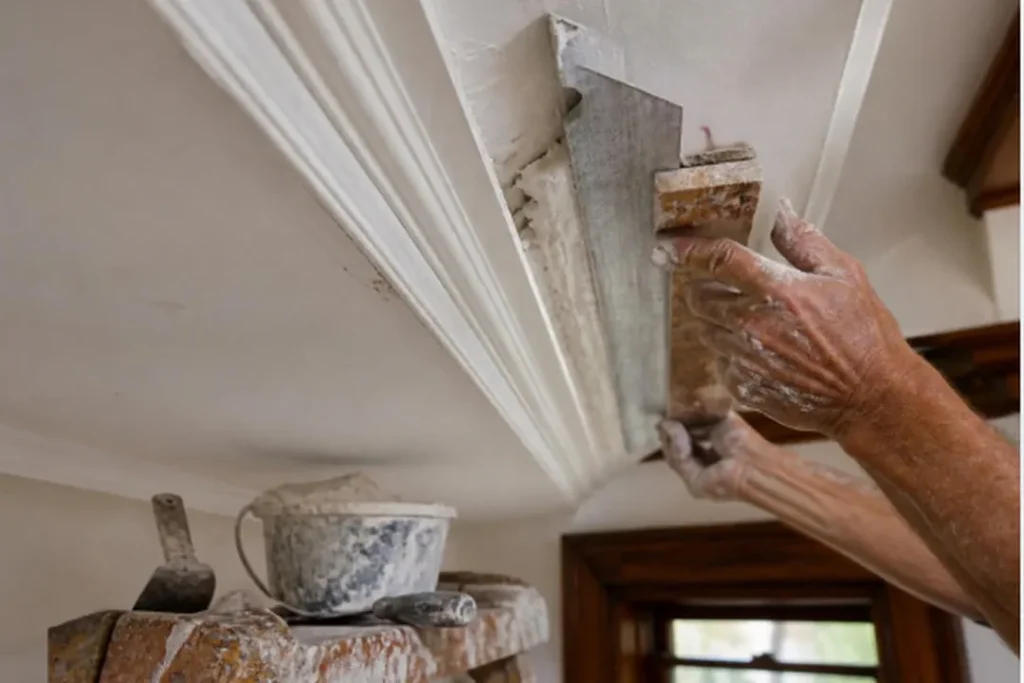
The second is casting replacement sections off-site using a mould taken from the original, then fixing them into position. This suits situations where large sections are missing or where the ceiling substrate needs significant repair before the cornice can be reinstated.
Both methods require skill and an understanding of how the original plaster was built up in layers. A single-coat approach will not replicate the depth or durability of the original work.
Heritage Listings and What They Mean for Repairs
Some older homes in Greater Western Sydney and the Inner West sit within heritage conservation areas or carry individual heritage listings. If your property is listed, any work affecting the external or internal fabric of the building may require council approval before it proceeds.
You can check whether your property has a heritage listing through the NSW State Heritage Inventory. Knowing your obligations before work starts avoids costly delays or compliance issues later.
Material Choices for Heritage Cornice Repairs
Traditional lime putty plaster is the preferred material for restoring original plaster cornices in pre-war homes. It bonds well to existing lime substrates and allows the wall assembly to breathe, which matters in older construction that was never designed to be sealed tight.
Modern gypsum-based products can be used in some situations, particularly for internal repairs away from moisture, but they need to be selected carefully. Material compatibility is one of the most common failure points in heritage restoration work.
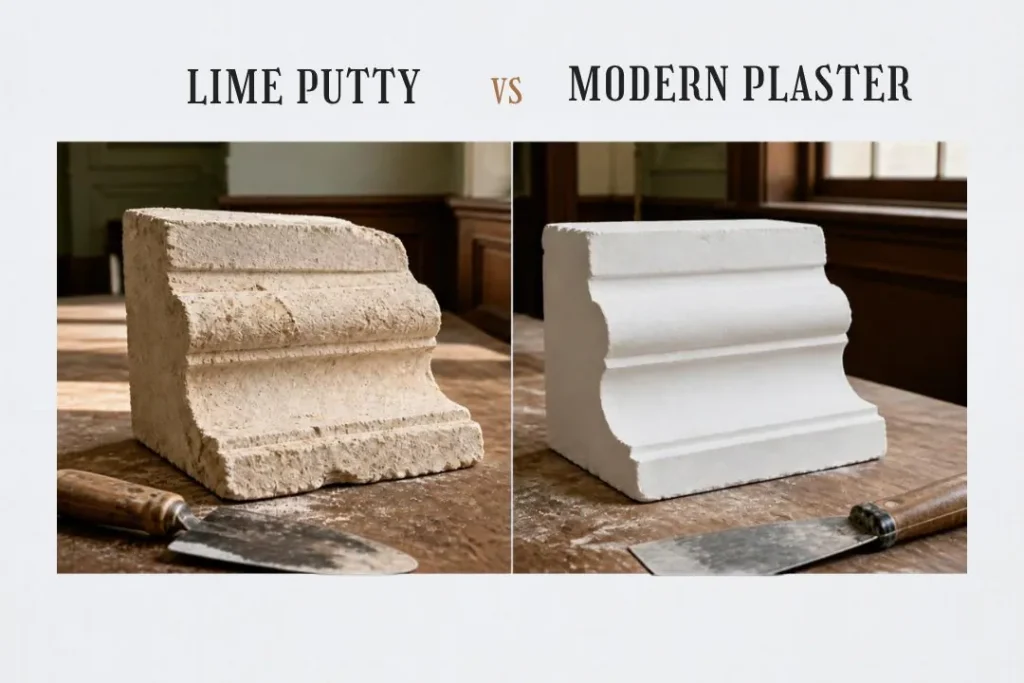
Colour and texture also matter. Older plaster has a particular surface quality that comes from the aggregate used and the finishing technique. A repair that is too smooth or too white will stand out under raking light, even after painting.
What the Repair Process Looks Like
A typical heritage cornice repair on a Federation or Bungalow home follows a clear sequence. The damaged section is carefully removed without disturbing the surrounding original plaster. The substrate is assessed and repaired if needed. The profile is templated, the base coats are built up in layers, and the finish coat is applied and tooled to match the original surface.
Depending on the size of the repair and the complexity of the profile, this process takes longer than a standard cornice job. Rushing the drying time between coats causes shrinkage cracks, so the work needs to be staged properly.
If you are budgeting for this kind of work, the final cost depends on the extent of damage, the complexity of the profile, and whether any ceiling substrate repairs are needed alongside the cornice. Understanding what drives the cost of cornice repairs helps you plan realistically before getting quotes.
Choosing a Plasterer for Heritage Work
Not every plasterer has experience with heritage home cornice repairs. This type of work requires an understanding of traditional materials, profiling techniques, and the patience to work slowly through a staged repair process.
For heritage home cornice repairs across Greater Western Sydney and the Inner West, look for a plasterer who can show you how they approach profile matching and what materials they intend to use before any work begins. Those two questions will tell you a lot about their experience with older homes.
Get a Quote for Your Heritage Cornice Restoration
Restoring original plaster cornices properly protects both the character and the value of your home. As a Sydney plastering company who handles decorative and ornamental cornice restoration on Federation and California Bungalow homes, you can rely on us for careful restoration of your heritage cornices.
We work with homeowners across the region, including those in Camden and Campbelltown, to match and restore heritage cornice profiles to a standard that holds up over time.
Call (02) 8000 1202 or get in touch online to arrange your free onsite quote.